
Turmeric
Turmeric
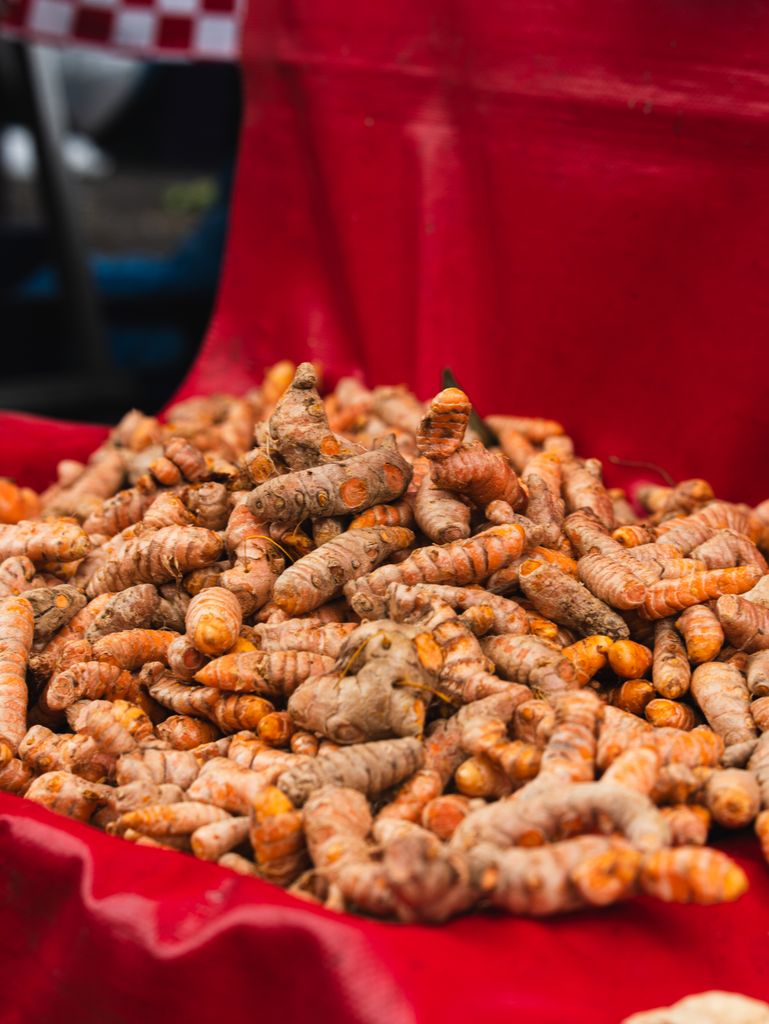
The characteristic yellow-orange colour of turmeric is primarily associated with its curcuminoids, a group of polyphenolic compounds that includes curcumin, demethoxycurcumin and bisdemethoxycurcumin. The rhizome also contains a volatile essential-oil fraction composed largely of sesquiterpenes, including ar-turmerone, α-turmerone and β-turmerone. These two groups of compounds contribute differently to the chemistry, colour, aroma and biological properties of turmeric.
Turmeric is propagated principally through its rhizomes rather than through viable seed. It is cultivated extensively across South and Southeast Asia and has subsequently been introduced to many tropical and subtropical regions. India remains the world's largest producer, consumer and exporter of turmeric.
Turmeric has a long history of culinary and traditional use, but it is also the subject of extensive modern research. Scientific investigation has focused particularly on its curcuminoids, volatile oils, polysaccharides and other constituents, including their chemical properties, stability, biological activity and potential applications.
The scientific identity of turmeric is therefore broader than curcumin alone. Turmeric rhizome is a complex botanical material containing multiple classes of compounds whose concentrations can vary according to cultivar, geographical origin, cultivation conditions, maturity, processing and storage.[1] [2] [3]
Taxonomy and Botanical Identity
Turmeric is the accepted common name for Curcuma longa L., a species belonging to the ginger family, Zingiberaceae. The species was formally described by Carl Linnaeus in 1753. Curcuma longa is an accepted species in the current Kew taxonomic database.[4]
Scientific ClassificationThe genus Curcuma belongs to Zingiberaceae and contains numerous species distributed primarily across tropical and subtropical Asia and extending into northern Australia. Curcuma longa is one of the economically important species within the genus.[5]
The currently accepted scientific name is:
Curcuma longa L.
The “L.” following the species name is the botanical author abbreviation for Carl Linnaeus, who formally published the name in Species Plantarum in 1753.[4]
Curcuma domestica Valeton has historically been used as a scientific name for turmeric. It is now treated as a heterotypic synonym of Curcuma longa rather than as a separate accepted species.[6]
This distinction is useful when examining older scientific literature, agricultural publications or databases, where turmeric may appear under either C. longa or C. domestica.
Turmeric is a rhizomatous geophyte. The commercially important portion of the plant is its rhizome—the underground stem—not a botanical root. The rhizome stores nutrients and produces new shoots and roots.[4]
Turmeric is also unusual in that it is regarded as sterile and does not normally produce viable seed, with propagation occurring vegetatively through its rhizomes. Kew describes it as having arisen through selection and vegetative propagation of a hybrid involving wild turmeric and another closely related species.[7]
“Turmeric” can refer to several plants in everyday usage, but culinary turmeric is specifically associated with Curcuma longa. Other species within Curcuma are distinct botanical species and should not automatically be treated as equivalent to C. longa. The genus itself has a considerably broader diversity than the single species used as culinary turmeric.[8]
[1]
[9]
Botanical Description
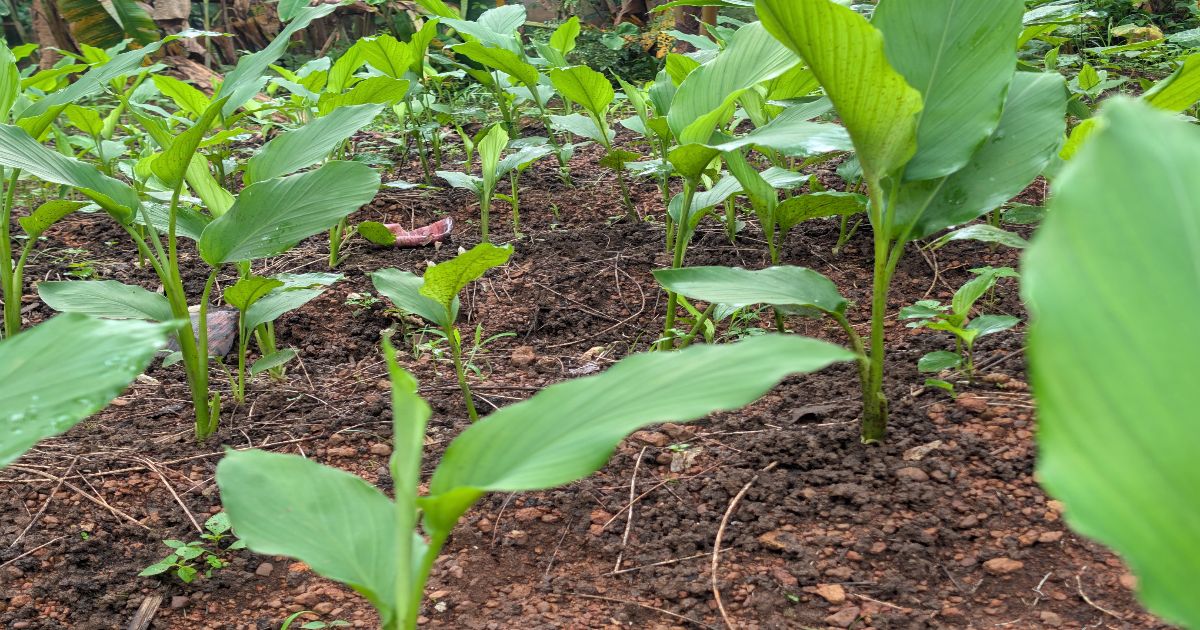
Curcuma longa is an upright, perennial herbaceous plant that develops from an underground rhizome. The above-ground plant generally reaches approximately 1 metre in height. The rhizome is thick, branched and aromatic, with ring-like markings formed by the bases of previous leaves.[7]
Turmeric develops as a clump of leafy shoots arising from the underground rhizome. Each shoot forms a pseudostem, created by the overlapping bases of the leaf sheaths. The plant remains vegetative for most of its growth period, with the rhizome serving as its principal storage and propagation organ.[7]
The leaves are large, simple and oblong, with a dark-green upper surface and a paler underside. Individual leaves can approach 1 metre in length. A leafy shoot may bear approximately 8–12 leaves.[7]
The leaves arise from the pseudostem and have prominent parallel venation characteristic of monocotyledonous plants.
The flowers are yellow-white and borne on a spike-like inflorescence. The flowering structure emerges from the plant's pseudostem and is supported by a distinct stalk. The flowers are sterile and do not normally produce viable seed. [7]
The rhizome is the commercially important part of the plant. Botanically, it is an underground stem rather than a root.
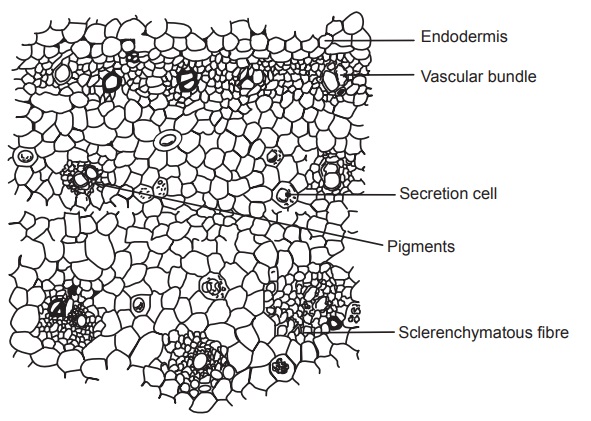
Turmeric rhizomes are thick, branched and aromatic. Their internal tissue ranges from yellow to orange because of the accumulation of characteristic pigments, particularly curcuminoids. The rhizomes also contain volatile compounds that contribute to turmeric's characteristic aroma.[7]
The rhizome performs several functions:
- Storage of carbohydrates and other reserves
- Vegetative propagation
- Formation of new shoots
- Accumulation of commercially important compounds
- Survival during periods of dormancy
True roots arise from the rhizome and function primarily in water and nutrient absorption. Some roots develop swollen terminal portions, but these should not be confused with the rhizome itself.
This distinction is important because turmeric is frequently described commercially as a “root” or “root spice.” Botanically, the principal harvested structure is an underground stem (rhizome).
Curcuma longa is unusual among cultivated spice plants because it is sterile and does not normally reproduce through viable seed. Propagation is predominantly vegetative, using pieces of rhizome containing viable buds.
This mode of propagation also means that cultivated turmeric is maintained largely through clonal multiplication, which has implications for the preservation and distribution of particular cultivated types. [7][1][10][11]
Origin and Geographical Distribution
Turmeric is closely associated with the Indian subcontinent, where it has a long history of cultivation, culinary use and traditional applications. The precise origin of Curcuma longa is difficult to establish because the plant is a domesticated crop that has been propagated vegetatively for generations. Southwestern India is included within its recognised native range.
Today, turmeric is cultivated widely across South and Southeast Asia and in other tropical and subtropical regions where temperature, rainfall and soil conditions are suitable for rhizome development.
India is the principal centre of turmeric cultivation and trade. Significant production is also found in:
Bangladesh
Sri Lanka
Nepal
Myanmar
Thailand
Indonesia
Vietnam
Malaysia
China
Nigeria
Ethiopia
Madagascar
Peru
Brazil
Jamaica
Fiji
Australia
The geographical distribution of turmeric reflects its requirement for a warm, humid growing environment with adequate moisture during vegetative growth and a comparatively drier period during rhizome maturation.
INDIA
India has a particularly important position in the global turmeric industry, serving simultaneously as a major producer, consumer and exporter. Turmeric is cultivated across several Indian states, with important production occurring in:
Telangana
Maharashtra
Karnataka
Tamil Nadu
Andhra Pradesh
Kerala
Odisha
West Bengal
Assam
Meghalaya
Tripura
Mizoram
Different growing regions are associated with different cultivated types and quality characteristics. These differences can influence properties such as rhizome size, colour, curcuminoid content, volatile-oil composition and processing characteristics.
Geographical origin is relevant not only to where turmeric is produced but also to its chemical and physical characteristics. Soil, climate, rainfall, temperature, altitude, cultivation practices and genetic background can influence the accumulation of curcuminoids and volatile constituents.
Consequently, turmeric originating from different regions may exhibit measurable differences in colour, aroma, flavour, chemical composition and quality characteristics. [12][13]
Climate and Environmental Requirements
Curcuma longa is a warm-climate tropical crop that performs best under conditions that support prolonged vegetative growth followed by a relatively dry period for rhizome maturation.
Temperature
Turmeric generally performs well at temperatures of approximately 20–35 °C. Warm conditions promote vegetative development and rhizome formation, while prolonged exposure to low temperatures can adversely affect growth.
Rainfall and Moisture
Adequate moisture is important during the active growth phase. Turmeric is generally cultivated under 1,500–2,500 mm of annual rainfall, although the optimum requirement varies with soil type, climate and water availability.
The crop benefits from adequate and reasonably well-distributed moisture during vegetative growth. As the rhizomes mature, comparatively drier conditions are desirable because excessive moisture can interfere with maturation and increase the risk of rhizome diseases.
Relative Humidity
Turmeric generally performs well under high relative humidity, particularly during vegetative development. Relative humidity around 70–90% is favourable under many cultivation conditions.
Altitude
Turmeric can be cultivated from near sea level to approximately 1,500 metres above sea level. Performance at a particular elevation depends on the interaction of temperature, rainfall, soil and local climatic conditions.
Light
Turmeric can grow under full sunlight as well as partial shade. In traditional and agroforestry cultivation systems, it may be grown beneath crops such as coconut, arecanut and banana, where filtered sunlight reaches the turmeric plants.
Waterlogging
Although turmeric requires substantial moisture, prolonged waterlogging is undesirable. Poor drainage restricts root-zone aeration and can increase the incidence of rhizome rot and other soil-borne diseases.
Good drainage is therefore an important consideration when selecting land for turmeric cultivation. [12] [13]
Soil Requirements and Nutrient Management
Turmeric performs best in fertile, well-drained soils with good organic-matter content. Although the crop can be cultivated across a range of soil types, physical drainage and adequate fertility are particularly important because the commercial product develops underground.
Soil Type
Suitable soils include:
Loamy soils
Sandy loams
Red loams
Lateritic soils, provided adequate drainage is maintained
Heavy soils that retain excessive water are less suitable because prolonged waterlogging can adversely affect rhizome development and increase the risk of disease.
Soil pH
A soil pH of approximately 5.5–7.0 is generally considered suitable for turmeric cultivation.
Soil conditions outside this range can influence nutrient availability and plant growth. Maintaining an appropriate pH is therefore useful for efficient nutrient utilisation.
Organic Matter
Turmeric responds well to soils containing adequate organic matter. Organic amendments can improve soil structure, moisture retention and nutrient availability while supporting biological activity in the soil.
Nutrient Requirements
Turmeric requires an adequate supply of the major plant nutrients:
Nitrogen (N) — supports vegetative growth and leaf development.
Phosphorus (P) — contributes to root and rhizome development and plant energy metabolism.
Potassium (K) — is important for overall plant development, water regulation and rhizome production.
Secondary and micronutrients are also required for normal growth, although their importance depends on the existing fertility of the soil.
Drainage
Good drainage is particularly important because the commercially valuable rhizomes remain underground throughout cultivation. Standing water can create conditions favourable for rhizome rot and other soil-borne diseases.
Raised beds, appropriate field preparation and drainage channels can therefore be useful where soils or rainfall conditions create a risk of waterlogging.
Soil and Quality
Soil conditions can influence not only yield but also the chemical characteristics of the harvested rhizomes. Differences in nutrient availability, moisture and environmental conditions can contribute to variation in curcuminoid and volatile-oil content.
For commercial turmeric production, soil management should therefore be considered both in terms of rhizome yield and the desired quality characteristics of the final spice. [12][13]
Cultivation and Propagation
Turmeric is propagated predominantly through vegetative propagation using rhizomes. Unlike many seed-propagated crops, cultivated Curcuma longa does not normally produce viable seed, making the selection and quality of planting rhizomes particularly important for establishing a healthy crop.
Planting Material
Healthy, mature rhizomes are selected as planting material. Two broad types of planting material may be used:
Mother rhizomes — the larger primary rhizome
Finger rhizomes — smaller lateral rhizomes arising from the primary rhizome
Planting pieces should possess healthy buds and should be free from visible disease, insect damage and physical deterioration.
Land Preparation
The soil is prepared to provide a loose, well-aerated and well-drained growing environment. Because the rhizomes develop underground, excessive soil compaction can restrict their development.
Where drainage is a concern, turmeric is commonly cultivated on raised beds or ridges to prevent prolonged accumulation of water around the rhizomes.
Planting
Rhizome pieces containing viable buds are placed in the prepared soil and covered with an appropriate layer of soil. Planting time varies according to the regional climate and rainfall pattern, but cultivation is generally coordinated with the onset of favourable moisture conditions.
Vegetative Growth
Following planting, buds on the rhizome develop into shoots. Leaf sheaths subsequently form the pseudostem, while roots develop from the rhizome and absorb water and nutrients.
The plant progressively accumulates carbohydrates and other reserves in the underground rhizome as the growing season advances.
Rhizome Development
Rhizome development is the principal objective of turmeric cultivation. The rhizome initially develops as a primary structure and subsequently produces lateral branches or fingers.
As the crop approaches maturity, the foliage gradually begins to senesce and the rhizomes become physiologically mature.
Harvest Maturity
Turmeric is generally harvested when the leaves and pseudostems begin to dry and turn yellow or brown. At this stage, the rhizomes have accumulated much of their mature dry matter and characteristic pigments.
The harvested rhizomes are subsequently cleaned and processed through operations such as curing, drying and polishing, depending on the intended market and product. [12][13]
Harvesting of Turmeric
Turmeric is harvested after the rhizomes have reached physiological maturity. The crop generally enters maturity when the leaves begin to yellow, dry and gradually wither, indicating that active vegetative growth is coming to an end and the accumulated reserves have been transferred to the underground rhizomes.
Harvest Maturity
The timing of harvest affects both rhizome yield and quality. Harvesting too early can result in smaller rhizomes with lower dry-matter accumulation, while harvesting after excessive deterioration of the plant may increase losses and complicate field operations.
At maturity, the above-ground foliage is removed or allowed to senesce before the rhizomes are lifted from the soil.
Uprooting
Because the commercial portion of turmeric is an underground rhizome, harvesting involves loosening the soil and lifting the rhizome clumps. Care is required to minimise mechanical damage, cuts and bruising because damaged rhizomes are more susceptible to microbial deterioration during subsequent handling and storage.
Depending on the scale of cultivation, harvesting may be carried out manually or using mechanical equipment.
Cleaning
Freshly harvested rhizomes are separated from adhering soil, roots and other plant material. Cleaning is important because soil and plant debris can carry microorganisms and increase contamination during subsequent processing.
The cleaned rhizomes are then transferred for processing, particularly curing and drying.
Mother and Finger Rhizomes
The harvested crop consists primarily of:
Mother rhizomes — the central primary rhizomes
Finger rhizomes — lateral branches developing from the mother rhizomes
The relative proportions and physical characteristics of these rhizomes vary according to cultivar, growing conditions and maturity.
Post-Harvest Importance
Fresh turmeric contains a high proportion of moisture and is therefore considerably more perishable than the dried spice. Post-harvest processing is consequently essential for converting the freshly harvested rhizome into a stable commercial product.
The major subsequent operations are:
Harvest → Cleaning → Curing → Drying → Polishing → Grading → Storage
The curing and drying stages are particularly important because they determine the moisture content, physical appearance, stability and several quality characteristics of the finished turmeric. [14]
Curing and Post-Harvest Processing of Turmeric
Freshly harvested turmeric rhizomes contain a high amount of moisture and are not suitable for long-term storage in their fresh state. Curing and drying convert the freshly harvested rhizomes into a stable dried spice with improved storage characteristics.
Traditional commercial processing generally involves three principal operations:
Cooking → Drying → Polishing
Cooking / Curing
Freshly harvested rhizomes are first cleaned and then cooked in boiling water. The rhizomes are heated until they reach an appropriate degree of cooking throughout.
Proper cooking is important for the quality of the finished turmeric. Overcooking can adversely affect colour, while undercooking can produce brittle dried rhizomes that are more susceptible to breakage during subsequent handling and polishing. The Spices Board indicates that, under conventional conditions, cooking may take approximately 45–60 minutes after boiling begins, although the actual time depends on the quantity of rhizomes, vessel, heating conditions and other processing variables.
Scientific turmeric boilers have been developed to provide more uniform heating and reduce the inconsistency associated with conventional cooking vessels.
Drying
After cooking, the rhizomes are dried to reduce their moisture content sufficiently for safe storage.
Traditional processing commonly uses sun drying, with the cooked rhizomes spread in a clean drying area and periodically turned to promote uniform moisture removal. Under suitable conditions, conventional sun drying may take approximately 10–15 days.
Properly dried turmeric becomes hard, brittle and relatively uniform in colour. The moisture content must be sufficiently reduced to inhibit microbial growth and deterioration during storage. The Spices Board notes that freshly harvested turmeric can contain around 80% moisture, while drying to approximately 10% moisture is used to improve storage stability.
Drying Method and Chemical Quality
Drying is not merely a moisture-removal operation. Temperature, drying duration, airflow and exposure to light can influence the chemical and physical quality of turmeric.
Research comparing different drying methods has demonstrated differences in curcumin retention, colour, antioxidant capacity and essential-oil content. Sun drying can result in greater degradation of some quality characteristics, while controlled drying techniques can reduce processing time and improve retention of certain compounds.
Consequently, the choice of drying method can have a direct bearing on the quality of turmeric powder produced from the dried rhizomes.
Polishing
Once adequately dried, turmeric rhizomes have a rough external surface containing scales and residual root material. Polishing removes or smooths this outer surface and improves the appearance of the dried spice.
Mechanical polishers can perform this operation more hygienically and consistently than traditional manual rubbing or trampling methods.
Processing and Curcuminoid Retention
Post-harvest processing can influence the concentration of turmeric's characteristic bioactive compounds. Heat treatment and drying conditions can affect curcuminoids and volatile constituents, meaning that the chemical composition of the finished dried spice is not necessarily identical to that of the freshly harvested rhizome.
This is particularly relevant when turmeric is processed for high-quality powder, oleoresin or other value-added products, where chemical composition is an important quality parameter.
Processing Sequence
A simplified commercial processing sequence is:
Harvest → Cleaning → Separation of rhizomes → Cooking/Curing → Drying → Polishing → Grading → Storage → Grinding
The exact sequence and equipment can vary according to the intended product and scale of processing.[15][16][17]
Grading, Quality Standards and Storage of Turmeric
After drying and polishing, turmeric is cleaned, graded and stored before being marketed as whole dried turmeric or processed further into powder, oleoresin and other products. The quality of turmeric can be affected at every stage from cultivation through storage, making post-harvest handling an important part of maintaining consistency.
Grading
Grading separates turmeric according to characteristics such as:
size and form of rhizomes;
colour;
cleanliness;
moisture content;
degree of damage;
presence of extraneous matter; and
chemical quality parameters.
Mechanical cleaning equipment such as sifters, destoners and air-screen separators can remove stones, soil, insects, excreta and other foreign material before the product is packed.
The quality of turmeric from different production regions can vary because of differences in soil, climate, agricultural practices and post-harvest processing. Consequently, standardised quality specifications are important for commercial trade.
Quality Parameters for Turmeric Powder
Indian food standards specify several quality requirements for turmeric powder. The prescribed limits include:
Parameter Requirement
Turmeric powder must also be free from mould, insects, rodent contamination, foreign odours and added colouring matter, including lead chromate.
These parameters are important because they assess different aspects of product quality. Moisture relates to storage stability, ash can indicate the mineral and extraneous matter content, while curcuminoid content provides an indication of the characteristic colouring compounds of turmeric.
Storage of Dried Turmeric
Dried turmeric should be stored in a cool, dry environment protected from moisture and contamination. ICAR–Indian Institute of Spices Research recommends storing cleaned and graded turmeric in clean packaging on wooden pallets, away from direct contact with the floor. Storage areas should be protected from insects and rodents.
Moisture ingress is particularly undesirable because it can promote microbial growth and deterioration. Packaging and storage conditions therefore have a direct effect on the shelf life and quality of dried turmeric.
Changes During Storage
Turmeric does not remain chemically unchanged during storage. Research has shown that curcumin and oleoresin content can decrease with increasing storage time, accompanied by changes in colour.
The type of packaging can influence the rate of deterioration. PET containers and laminated aluminium packaging have demonstrated better preservation of certain quality characteristics under particular storage conditions.
This is particularly relevant after grinding because turmeric powder has a much greater exposed surface area than whole rhizomes, potentially increasing its interaction with oxygen, moisture and light.
Storage of Turmeric Powder
For a commercial turmeric powder, quality control therefore extends beyond the raw rhizome. A consistent product requires control over:
Cultivation → Harvest → Curing → Drying → Cleaning → Grading → Grinding → Packaging → Storage
The final product's moisture, colour, curcuminoid content, microbial quality, foreign matter and storage stability are all relevant to maintaining a consistent turmeric powder. [18] [19]
[20] [21]
Chemical Composition of Turmeric Rhizome
The chemical composition of turmeric is complex and can be broadly divided into non-volatile compounds and volatile compounds. The two most important chemical fractions are curcuminoids and essential oil.
Curcuminoids
Curcuminoids are a group of diarylheptanoid polyphenols responsible for much of turmeric's characteristic yellow-orange colour. The three principal curcuminoids are:
Curcumin
Demethoxycurcumin
Bisdemethoxycurcumin
Curcumin is generally the predominant member of this group. Together, these compounds account for the principal curcuminoid fraction of Curcuma longa rhizomes. Their concentration can vary according to cultivar, geographical origin, growing conditions, maturity and processing. [22]
Volatile Oil
Turmeric rhizomes also contain an essential-oil fraction composed predominantly of terpenoid compounds. The principal constituents include:
ar-Turmerone
α-Turmerone
β-Turmerone
Curlone
Zingiberene
α-Phellandrene
β-Sesquiphellandrene
Turmerones, particularly ar-turmerone, α-turmerone and β-turmerone, are characteristic constituents of turmeric rhizome oil and contribute substantially to its aroma and flavour. [23]
The proportion of these volatile compounds can vary considerably between samples. For example, published analyses of Indian turmeric rhizome oils have reported ar-turmerone concentrations ranging from approximately 24% to 46%, while α- and β-turmerone can also constitute substantial fractions of the oil.[24]
Other Constituents
In addition to curcuminoids and volatile oils, turmeric rhizomes contain several other classes of compounds, including:
Carbohydrates and sugars
Proteins
Flavonoids
Phenolic compounds
Sterols
Organic acids
Polysaccharides
Mineral elements
The relative abundance of these constituents depends on the botanical material and its processing history.[22]
Chemical Composition Is Not Fixed
The composition of turmeric should not be considered a single fixed chemical profile. Cultivar, geographical origin, soil, climate, maturity, post-harvest processing, drying conditions and storage can all influence the concentration of important constituents.
This is particularly relevant when comparing turmeric from different sources or evaluating the quality of turmeric powder. A measurement of curcumin or total curcuminoids alone does not describe the entire chemical composition of the spice.
Turmeric is therefore better understood as a complex botanical matrix containing multiple classes of compounds, rather than simply as a source of curcumin. [25] [24] [25]
Nutritional Composition of Turmeric
Turmeric is used primarily as a spice and colouring ingredient, rather than as a major source of calories or macronutrients. Nevertheless, the dried rhizome contains carbohydrates, dietary fibre, protein, minerals and small amounts of fat.
The nutritional composition varies according to cultivar, growing conditions, maturity, processing and moisture content. Dried turmeric is substantially more concentrated than fresh rhizome because drying removes most of its water.
Major Nutritional Components
The dried rhizome contains:
Carbohydrates — the major nutritional fraction, consisting largely of starch and other carbohydrates.
Dietary fibre — contributes to the structural matrix of the dried rhizome.
Protein — present in smaller quantities.
Fat — present in relatively small amounts, including lipids associated with the rhizome.
Minerals — including potassium, phosphorus, calcium, magnesium and iron in varying amounts.
Water — substantially reduced during curing and drying.
Starch
Starch is an important component of turmeric rhizomes. This is reflected in Indian food standards, which specify a maximum total starch content of 60% for turmeric powder. The standard also limits moisture to 10%, helping distinguish a properly dried spice from material containing excessive moisture or other undesirable matter.
Curcuminoids and Nutrition
Curcuminoids are often discussed in connection with turmeric, but they should be distinguished from its conventional nutritional components. Curcumin is primarily a bioactive phytochemical rather than a macronutrient.
Similarly, the volatile constituents of turmeric contribute to its aroma and biological characteristics but occur in relatively small quantities compared with carbohydrates and other structural components.
Nutritional Value in Culinary Use
Although turmeric contains several nutrients and bioactive compounds, the quantities consumed as a culinary spice are generally relatively small. Its importance in the diet therefore extends beyond conventional nutrition to its role as a flavouring, colouring and phytochemical-rich spice.
For this reason, turmeric should not be regarded simply as a nutritional supplement. Its principal culinary function is to provide colour, aroma and flavour, while its diverse phytochemicals have become subjects of scientific investigation. [26]
Turmeric Varieties and Cultivars
Curcuma longa is represented by numerous cultivated types, landraces and improved varieties. These types can differ substantially in yield, crop duration, rhizome morphology, colour, curcuminoid content, essential-oil composition, oleoresin content and resistance or tolerance to particular pests and diseases.
Traditional cultivars are often associated with the regions where they have historically been cultivated. Examples include Alleppey, Lakadong, Erode Local, Duggirala, Tekurpetta, Kodur and Armoor. Improved varieties have subsequently been developed through selection from germplasm, progeny selection and other breeding approaches.[27]
Important Improved Varieties
Several improved turmeric varieties developed in India have specific combinations of yield, maturity period and chemical quality.
*Yield figures are variety-specific reported values under specified evaluation conditions and should not be interpreted as guaranteed farm yields. [28]
Varietal Differences in Chemical Composition
An important characteristic of turmeric varieties is that curcumin content is not uniform across cultivars.
For example, IISR Prabha and IISR Prathibha are reported at approximately 6.5% curcumin, whereas Suvarna is reported at about 4.0% and IISR Surya at 2–3%.[29]
Essential-oil composition can also differ substantially. IISR Surya, for example, has been characterised by relatively high proportions of zingiberene (21.07%) and β-sesquiphellandrene (14.13%), together with 1,8-cineole and α-humulene. Its lower curcumin concentration is accompanied by a distinctive volatile-oil profile.[30]
This demonstrates an important point: “high-curcumin turmeric” and “high-aroma turmeric” are not necessarily the same thing. Different varieties may have been selected for different combinations of yield, colour, curcuminoids, essential oils, disease tolerance and processing characteristics.
Why Varieties Matter
The choice of cultivar can influence the intended end use of turmeric.
A variety selected for:
- high curcumin may be attractive for curcuminoid extraction;
- strong colour may be desirable for culinary colouring;
- high essential-oil content may be valuable for aromatic applications;
- high dry recovery can improve the economics of dried-spice production;
- high yield can improve agricultural productivity; and
- disease tolerance can reduce production risk.
Therefore, turmeric should not be evaluated solely by the name Curcuma longa. Cultivar identity is an important part of understanding the raw material.
A Particularly Interesting New Variety: IISR Surya
IISR Surya was released in 2025 and is notable because it was developed with a different quality profile from the traditionally high-curcumin types. It has a light-yellow rhizome, an average fresh yield of approximately 29 t/ha, and is described as particularly suitable for the powdering industry.
Its reported chemical profile includes 2–3% curcumin, 21.07% zingiberene, 14.13% β-sesquiphellandrene, 3.42% 1,8-cineole and 6.30% α-humulene. [30]
This is useful evidence that turmeric breeding is not focused exclusively on increasing curcumin. A turmeric variety can be selected for a particular combination of colour, aroma, yield and processing suitability. [31] [32] [33] [34]
Pests and Diseases of Turmeric
Turmeric is affected by a range of insect pests, nematodes and fungal or fungal-like diseases. Their incidence can vary with cultivar, climate, soil moisture, planting material, crop duration and field management.
Among the most important problems are rhizome rot, leaf blotch, leaf spot, shoot borer and rhizome scale.[35]
Major Diseases
Rhizome Rot
Rhizome rot is one of the most important diseases affecting turmeric. It is associated with soil-borne pathogens including species of Pythium, Fusarium and Rhizoctonia.
Infected plants may show yellowing and drying of leaves, followed by deterioration of the underground rhizomes. The rhizomes become soft and discoloured as the disease progresses.
The disease is favoured by conditions that promote excessive soil moisture and poor drainage. Healthy planting material, appropriate drainage and integrated disease-management practices are therefore important preventive measures. [36]
Leaf Blotch
Leaf blotch, associated with Taphrina maculans, is an important foliar disease of turmeric.
Initial symptoms appear as small brown or yellowish spots on the leaves. These lesions can enlarge and merge, causing extensive discoloration and eventually drying of affected leaves. Severe infection can reduce photosynthetic capacity and consequently affect rhizome yield. [37]
![Leaf Blotch[ref: https://www.celkau.in/Crops/spices/turmeric/leafblotch.php]](https://www.celkau.in/Crops/Cropsimg/Spicesimg/Turmeric/disease/leaf%20blotch/icon/1.webp)
![Leaf Blotch[ref: https://www.celkau.in/Crops/spices/turmeric/leafblotch.php]](https://www.celkau.in/Crops/Cropsimg/Spicesimg/Turmeric/disease/leaf%20blotch/symptoms/1.png)
![Leaf Spot[ref: https://www.celkau.in/crops/spices/Turmeric/leafspot.php]](https://www.celkau.in/crops/Cropsimg/Spicesimg/Turmeric/disease/Leaf%20spot/icon/1.jpg)
![Leaf Spot[ref: https://www.celkau.in/crops/spices/Turmeric/leafspot.php]](https://www.celkau.in/crops/Cropsimg/Spicesimg/Turmeric/disease/Leaf%20spot/symptoms/1.png)
Major Insect Pests
Shoot Borer
The shoot borer, Conogethes punctiferalis, is one of the major insect pests of turmeric. The larvae bore into the pseudostem and feed on internal tissues.
A characteristic symptom is a bore hole in the pseudostem accompanied by extrusion of frass. The central shoot may subsequently wither and dry, producing a characteristic dead-heart appearance.[18]
Rhizome Scale
The rhizome scale, Aspidiella hartii, attacks turmeric rhizomes both in the field and during storage. The insects feed by sucking sap from the rhizome.
Heavy infestation can cause rhizomes to shrivel and desiccate, affecting both their quality and their ability to germinate when used as planting material.[18]
Nematodes
Turmeric can also be affected by plant-parasitic nematodes. Important groups include:
Root-knot nematodes (Meloidogyne spp.)
Lesion nematodes (Pratylenchus spp.)
Burrowing nematodes (Radopholus similis)
Reniform nematodes (Rotylenchulus reniformis)
Root-knot nematodes can cause root galling, stunted growth, yellowing, reduced tillering and premature plant decline. Severe infestations can result in poor crop establishment and reduced rhizome yield. [40]
Integrated Management
Effective turmeric protection generally depends on integrated management rather than reliance on a single treatment. Important measures include:
- using healthy, disease-free planting rhizomes;
- selecting suitable cultivars;
- maintaining good drainage;
- appropriate crop rotation;
- removing severely infected plant material;
- monitoring pest populations;
- using biological control agents where appropriate; and
- applying registered plant-protection products according to current agricultural recommendations.
Cultivar selection can also influence susceptibility. For example, ICAR–Indian Institute of Spices Research identifies differences among turmeric genotypes in their reactions to rhizome rot, leaf diseases, shoot borer and rhizome scale.[41] [42]
Grinding and Production of Turmeric Powder
Turmeric powder is produced by grinding dried turmeric rhizomes into a fine, uniform material suitable for culinary and food-industry use. The quality of the powder depends not only on the grinding operation but also on the condition of the rhizomes entering the mill.
Under Indian food standards, turmeric powder is defined as the powder obtained by grinding dried rhizomes of Curcuma longa L. The finished powder must possess the characteristic odour and flavour of turmeric and must be free from mould, insects, rodent contamination, foreign odours, added colouring matter and morphologically extraneous material such as foreign starch.
Preparation Before Grinding
Before grinding, dried turmeric rhizomes should be clean, adequately dried and free from visible contamination.
The general processing sequence is:
Dried rhizomes → Cleaning → Sorting → Grinding → Sieving → Quality control → Packaging
Cleaning and sorting are important because stones, soil, damaged rhizomes and other foreign material can enter the grinding system and subsequently affect the quality of the powder.
Grinding
Dried turmeric rhizomes are reduced to powder using mechanical grinding equipment. The objective is to obtain the required particle size while maintaining the characteristic colour, aroma and chemical properties of the spice.
The grinding system may vary according to production scale. Small processors may use relatively simple spice grinders, whereas larger operations can employ industrial milling systems designed for continuous processing and controlled particle-size reduction.
Heat Generated During Grinding
Grinding is not purely a mechanical size-reduction process. Friction between the rhizome material and the grinding equipment generates heat.
Excessive heat can be undesirable because turmeric contains volatile constituents as well as heat-sensitive compounds. Consequently, industrial processing may use equipment and operating conditions designed to limit excessive temperature rise during milling.
This becomes particularly important when the objective is to preserve the aroma and volatile-oil fraction of the turmeric rather than simply producing a powder.
Sieving
After grinding, the material can be passed through a sieve or screening system to obtain a more uniform particle size.
Sieving can:
- remove coarse particles;
- improve powder uniformity;
- separate fibrous material;
- produce the desired fineness; and
- improve consistency between production batches.
The required particle size depends on the intended application. A culinary powder may have different requirements from turmeric intended for extraction or industrial processing.
Powder Quality
Grinding does not improve poor-quality raw material. The characteristics of the finished powder remain strongly dependent on the cultivar, rhizome quality, curing, drying and storage conditions that preceded milling.
For this reason, colour intensity, aroma, moisture, curcuminoid content and microbial quality should be considered together when evaluating turmeric powder.
Moisture Control
Moisture is particularly important after grinding. FSSAI specifies a maximum moisture content of 10% by weight for turmeric powder. Lower moisture helps reduce the risk of microbial deterioration and contributes to storage stability.
The powder should therefore be protected from moisture during both processing and subsequent packaging.
Prevention of Adulteration
Turmeric powder presents a greater opportunity for adulteration than whole dried rhizomes because the original physical identity of the rhizome is lost during grinding.
Indian food standards specifically require turmeric powder to be free from added colouring matter, including lead chromate, and foreign starch. The standard also requires the test for lead chromate to be negative.
This makes raw-material traceability and laboratory quality control particularly important for commercial turmeric powder.
From Rhizome to Finished Powder
A properly controlled production chain can therefore be represented as:
Cultivation → Harvest → Curing → Drying → Cleaning → Sorting → Grinding → Sieving → Quality Testing → Packaging → Storage
Each stage can influence the characteristics of the final powder. Grinding is consequently only one part of turmeric powder production; the quality of the finished product begins with the quality of the rhizome entering the processing chain. [43] [44]
Quality Parameters of Turmeric Powder
The quality of turmeric powder cannot be determined by colour alone. A properly evaluated product is assessed through a combination of physical, chemical, microbiological and sensory characteristics.
Indian food standards specify several minimum requirements for turmeric powder, including limits for moisture, ash and starch, together with a minimum curcuminoid content.
Moisture Content
Moisture is one of the most important quality parameters because excessive moisture can reduce storage stability and encourage microbial deterioration.
For turmeric powder, the Indian standard specifies a maximum moisture content of 10% by weight.
Moisture can also increase during storage if the packaging allows water vapour to enter. Studies on stored turmeric powder have demonstrated increases in moisture over time under different packaging conditions.
Curcuminoid Content
Curcuminoids are among the principal characteristic compounds of turmeric. For turmeric powder, Indian standards specify a minimum colouring power expressed as 2.0% curcuminoid content on a dry basis.
However, this minimum regulatory specification should not be interpreted as representing the typical composition of every turmeric variety. Cultivars can contain substantially different concentrations of curcuminoids.
Consequently, curcuminoid content is a useful analytical parameter, but it is not by itself a complete definition of turmeric quality.
Total Ash
Total ash represents the inorganic residue remaining after the organic material in the sample has been incinerated.
For turmeric powder, the specified maximum is 9.0% on a dry basis.
An unusually high ash value can indicate excessive mineral material or contamination, although interpretation requires consideration of the complete analytical profile.
Acid-Insoluble Ash
Acid-insoluble ash is a more specific indicator of siliceous material and other acid-insoluble inorganic matter.
The specified maximum for turmeric powder is 1.5% on a dry basis.
This parameter is particularly relevant because soil, sand and other mineral material can become associated with rhizomes during harvesting and subsequent handling.
Total Starch
Turmeric naturally contains starch as an important component of its rhizome. The Indian specification sets a maximum total starch content of 60% for turmeric powder.
Starch therefore cannot simply be treated as an adulterant; turmeric naturally contains it. The analytical result has to be interpreted against the established specification and the characteristics of the particular raw material.
Sensory Characteristics
Good-quality turmeric powder should possess the characteristic odour and flavour of turmeric and should not have mustiness or other foreign odours.
It should also be free from:
- Mould
- Living or dead insects
- Insect fragments
- Rodent contamination
- Foreign odours
- Morphologically extraneous matter
- Added colouring matter
The Indian standard specifically prohibits added colouring matter, including lead chromate, and requires the lead-chromate test to be negative.
Colour
Colour is an important commercial characteristic of turmeric, but visual colour should not be treated as a direct measurement of curcuminoid concentration.
The apparent colour of powder can be influenced by cultivar, processing, particle size, storage and potentially by adulteration. Chemical analysis is therefore required when a precise curcuminoid value is important.
Aroma and Volatile Constituents
Turmeric's characteristic aroma is associated partly with its volatile-oil fraction, which contains compounds such as turmerones and other terpenoid constituents.
These volatile compounds can be affected by processing and storage. Consequently, two turmeric powders with similar curcuminoid concentrations may nevertheless differ noticeably in aroma.
Microbiological Quality
Turmeric powder is a dried food ingredient, but drying does not eliminate the possibility of microbial contamination. Hygiene during harvesting, processing, grinding, handling and packaging is therefore important.
Microbiological testing is particularly relevant for commercially packaged turmeric because contamination can occur after grinding if the processing environment or packaging operation is poorly controlled.
A Multi-Parameter Approach
A meaningful assessment of turmeric powder therefore involves several parameters simultaneously:
Identity → Appearance → Aroma → Moisture → Ash → Acid-insoluble ash → Curcuminoids → Starch → Microbiological quality → Contaminants → Adulteration
No single measurement adequately describes the quality of turmeric powder.
For Rasvya Research, this distinction is important: high curcumin, intense colour, strong aroma and regulatory compliance are related but separate characteristics. A high-quality turmeric powder should be evaluated as a complete product rather than by one headline number. [45] [20]
Adulteration of Turmeric
Adulteration is an important quality and food-safety concern in turmeric, particularly in powdered turmeric, where the original physical characteristics of the rhizome are no longer visible.
Adulteration can involve the addition of substances intended to increase apparent colour, weight, volume or commercial value, or the substitution of turmeric with lower-cost materials.
Lead Chromate
One of the most serious forms of turmeric adulteration involves lead chromate (PbCrO₄), a bright yellow pigment.
Lead chromate can artificially intensify the yellow colour of turmeric, making lower-quality or less brightly coloured material appear more attractive. Scientific investigations have documented its use in turmeric supply chains in South Asia.
This is particularly concerning because lead is a toxic heavy metal, and exposure can have serious neurological and developmental consequences. Lead chromate adulteration is therefore not merely an issue of product authenticity; it is a significant food-safety concern.
Evidence of Adulteration
A 2024 study examined 356 turmeric samples collected from wholesale and retail markets in 23 cities across India, Pakistan, Sri Lanka and Nepal. Detectable lead above 2 μg/g was found in 14% of the samples. Some samples contained exceptionally high concentrations, with levels exceeding 1,000 μg/g in certain locations. Chemical patterns in highly contaminated samples were consistent with lead chromate adulteration.
More recent research published in 2026 has investigated the mechanisms that allow lead chromate adulteration to persist within parts of the turmeric supply chain, further demonstrating that the problem can involve multiple stages between processing and retail.
Other Forms of Adulteration
Turmeric powder can also be adulterated through the addition or substitution of starches, flours, synthetic colours and other materials.
Not every non-turmeric substance found in a sample necessarily represents the same type of fraud. Some materials may be introduced deliberately to increase bulk, while synthetic pigments may be used specifically to modify appearance.
Indian food standards require turmeric powder to be free from added colouring matter, including lead chromate, and specify requirements concerning foreign starch and other quality parameters.
Why Colour Can Be Misleading
Turmeric's natural colour is primarily associated with its curcuminoid pigments, but visual colour is not a sufficiently reliable method for determining authenticity or chemical quality.
A very intense yellow appearance can therefore be commercially attractive without necessarily indicating higher quality.
This creates an important distinction:
Bright colour ≠ necessarily high curcuminoid content ≠ necessarily high quality.
Chemical analysis is required when the objective is to determine the actual composition and safety of a turmeric sample.
Detection
Several analytical techniques have been investigated for detecting adulteration. These include:
- X-ray fluorescence (XRF) for screening heavy-metal contamination;
- Inductively coupled plasma mass spectrometry (ICP-MS) for precise elemental analysis;
- Raman spectroscopy for detecting lead chromate;
- Spectroscopic methods for identifying synthetic colourants and other adulterants.
Research has demonstrated that FT-Raman spectroscopy can detect lead chromate adulteration in turmeric, including concentrations around 0.5% and above under the conditions examined in the study.
Simple consumer tests may provide preliminary indications of suspicious colour behaviour, but they cannot replace laboratory testing, particularly for determining whether lead is present or establishing its concentration.
Whole Rhizome vs Powder
The risk of undetected adulteration is conceptually different between whole dried turmeric and turmeric powder.
A whole rhizome retains much of its physical identity and can be visually inspected for abnormal colour or material. Once the rhizome has been ground, however, its original structure is destroyed and added substances become considerably more difficult to distinguish visually.
This is one reason traceability, controlled processing and analytical testing are important in commercial turmeric powder production.
Quality Assurance
A reliable turmeric supply chain should therefore incorporate controls at multiple stages:
Raw-material sourcing → Identification → Cleaning → Processing → Grinding → Laboratory testing → Packaging → Traceability
For a commercial turmeric powder, visual appearance alone should never be treated as proof of purity.[46] [47] [48]
Food Safety and Contaminants in Turmeric
Turmeric is a dried agricultural product, and its safety can be affected by contaminants introduced before harvest, during post-harvest processing, or during storage and handling. Important categories include mycotoxins, pesticide residues, heavy metals and microbiological contaminants. Analytical methods have been developed specifically for detecting multiple classes of contaminants in turmeric because its complex chemical matrix can interfere with residue analysis.
Mycotoxins
Mycotoxins are toxic compounds produced by certain fungi. In turmeric and other spices, aflatoxins are of particular concern.
Aflatoxins can be produced by moulds including Aspergillus flavus and Aspergillus parasiticus. Contamination can occur before or after harvest, particularly when agricultural products are exposed to conditions favourable to fungal growth.
Importantly, many mycotoxins are relatively stable and may persist through subsequent food processing. Consequently, prevention of contamination and appropriate storage are important components of turmeric safety.
Pesticide Residues
Pesticides may be used during cultivation to control insects, diseases and other agricultural pests. Residues can remain in harvested turmeric and may persist through some post-harvest operations.
Because turmeric can be consumed regularly as a spice, residue levels need to comply with the maximum residue limits (MRLs) applicable to the relevant market. Analytical methods have been validated for the simultaneous determination of large numbers of pesticide residues in turmeric. One validated method examined 195 pesticides together with five mycotoxins.
Heavy Metals
Heavy metals such as lead, cadmium and arsenic are another category of potential contaminants.
The source of a heavy metal is important when interpreting a contaminated sample. Contamination can potentially originate from environmental exposure, agricultural inputs, processing equipment, storage materials or other stages of the supply chain.
Lead is particularly significant in turmeric because, in addition to environmental contamination, deliberate addition of lead-containing pigments such as lead chromate has been documented as an adulteration practice. This is distinct from naturally occurring or environmental lead contamination.
A recent 2026 investigation of raw turmeric collected directly from farms in six Indian states reported lead concentrations ranging from below the laboratory limit of quantification to 1.87 mg/kg, below the reported FSSAI limit for turmeric. The findings point toward the importance of examining post-harvest handling and processing when investigating elevated lead concentrations in finished turmeric products.
Microbiological Contamination
Dried spices have relatively low water activity, which inhibits the growth of many microorganisms, but drying does not make turmeric sterile.
Microorganisms can be introduced through:
- soil and agricultural environments;
- contaminated water;
- harvesting equipment;
- handling surfaces;
- processing equipment;
- personnel;
- storage conditions; and
- contaminated packaging environments.
Fungal contamination is particularly important because certain fungi can produce mycotoxins.
Processing and Storage
Food safety therefore extends beyond cultivation. A turmeric rhizome may be agriculturally sound but become contaminated during curing, drying, grinding, storage or packaging.
This is especially relevant to powdered turmeric because grinding increases the number of handling and processing steps and eliminates much of the physical identity of the original rhizome.
Proper drying, hygienic processing, appropriate storage conditions and protection from moisture are therefore essential components of food safety.
Regulatory Control
In India, turmeric is subject to the food-safety framework administered by the Food Safety and Standards Authority of India (FSSAI). FSSAI maintains separate regulations covering product standards as well as contaminants, toxins and residues. These regulations are periodically amended, making the applicable requirements a regulatory matter that should be checked against the current version rather than relying on older specifications.
A Complete Safety Assessment
The safety of turmeric is therefore better represented as a chain:
Cultivation → Harvest → Curing → Drying → Processing → Grinding → Storage → Packaging
At different stages, different hazards can arise.
A comprehensive quality-control programme may therefore examine:
Identity + Moisture + Microbiology + Mycotoxins + Pesticide Residues + Heavy Metals + Adulterants
No single test can establish the complete safety or authenticity of a turmeric powder. [49]
[50]
[51]
Uses of Turmeric
Turmeric has applications extending well beyond its role as a culinary spice. The dried rhizome and its derived products are used in food preparation, food colouring, traditional practices, cosmetics and industrial applications. Its uses arise from the combination of its characteristic colour, flavour, aroma and diverse chemical constituents.
Culinary Use
The most widespread use of turmeric is as a spice.
Turmeric powder is incorporated into:
- Curry preparations
- Spice blends
- Pickles
- Soups and sauces
- Rice and grain dishes
- Meat and vegetable preparations
- Beverages
- Processed foods
Its characteristic yellow-orange colour and warm, slightly bitter flavour make it an important component of many South Asian cuisines.
Natural Food Colouring
Turmeric is also an important natural source of yellow colour.
The colour is primarily associated with its curcuminoid pigments, particularly curcumin. Turmeric-derived colour preparations have therefore been investigated and used as alternatives to some synthetic colouring agents.
Turmeric can be used directly as a spice or processed into more concentrated colouring preparations such as turmeric oleoresin.
Food-Industry Applications
Beyond household cooking, turmeric and turmeric-derived ingredients have applications in the food industry as:
- Natural colouring ingredients
- Flavouring ingredients
- Spice blends
- Functional food ingredients
- Food-grade extracts
- Oleoresins
Turmeric's starch and cellulose fractions have also attracted research interest for food-technology and biomaterial applications.
Traditional Uses
Turmeric has a long history of use in traditional systems of medicine, particularly in South Asia and other parts of Asia.
Traditional preparations have used turmeric in forms including powders, pastes, decoctions and preparations incorporated into foods. Historically reported applications include digestive, inflammatory and topical uses.
These traditional applications should be distinguished from clinically established therapeutic indications. Evidence for a traditional use does not by itself establish that turmeric is an effective treatment for a particular disease.
Cosmetic Applications
Turmeric and its constituents have also been incorporated into cosmetic and personal-care formulations.
Its colour and phytochemical constituents have made it relevant to formulations such as skin-care products and traditional cosmetic preparations. Turmeric has also historically been used as a natural dye for non-food purposes.
Turmeric Oleoresin
Turmeric can be processed into oleoresin, a concentrated extract containing both colouring constituents and volatile components.
Oleoresin can provide a more concentrated and standardised ingredient than ground turmeric and has applications in the food industry where controlled colour and flavour delivery are desirable.
Research and Emerging Applications
Modern research has expanded interest in turmeric into areas including:
- Functional foods
- Natural food colourants
- Encapsulation technologies
- Nanotechnology
- Food-packaging materials
- Bioactive ingredient delivery
- Extraction and purification technologies
Research has particularly investigated ways of improving the stability and usability of turmeric-derived compounds in food systems.
Turmeric as a Raw Material
The different forms of turmeric can therefore be viewed as a progression:
Fresh rhizome → Dried rhizome → Turmeric powder → Oleoresin → Purified constituents
Each successive form generally involves greater processing and a more specific intended application.
For Rasvya Research, this distinction is important because turmeric powder is the whole-ground spice, whereas products such as turmeric oleoresin and purified curcuminoids are chemically and commercially different materials. They should not be treated as interchangeable. [52] [53] [54]
Global Production and Trade of Turmeric
Turmeric is cultivated across tropical and subtropical regions, but India occupies a dominant position in global turmeric production and trade. India is described by the Indian government and trade bodies as the world's largest producer, consumer and exporter of turmeric.
India as the Global Leader
India's turmeric sector is substantial in both agricultural production and international trade. During 2023–24, India cultivated approximately 305,000 hectares of turmeric and produced around 1.074 million tonnes. During the same period, turmeric exports were approximately 162,000 tonnes, valued at about US$226.5 million.
India's importance extends beyond raw turmeric. The country has a significant processing industry producing:
- Dried turmeric rhizomes
- Turmeric powder
- Turmeric oleoresin
- Curcumin and curcuminoid products
- Other value-added turmeric ingredients
This gives India an important position across several stages of the turmeric value chain.
Major Producing Regions in India
Turmeric is cultivated in numerous Indian states, with important production centres including:
- Telangana
- Maharashtra
- Karnataka
- Tamil Nadu
- Andhra Pradesh
- Kerala
- Odisha
- West Bengal
- Assam
- Meghalaya
India's large geographical diversity also contributes to the availability of numerous cultivars and regionally distinctive turmeric types.
International Trade
Turmeric is traded internationally in several forms, including:
Whole dried rhizomes → Turmeric powder → Oleoresin → Curcuminoid extracts
The form of the product has a significant effect on its commercial value. Processing and standardisation can transform a relatively low-value agricultural commodity into a more specialised food or industrial ingredient.
India's overall spice exports remain substantial. During 2025–26, India exported approximately 1.734 million tonnes of spices and spice products, valued at ₹39,140 crore (US$4.431 billion). Turmeric accounted for approximately 7% of the export basket by value.
Major Export Markets
Indian spices are exported to a broad range of international markets. Major destinations for India's spice exports include:
United States
China
United Arab Emirates
Bangladesh
Saudi Arabia
United Kingdom
Thailand
Malaysia
Indonesia
Sri Lanka
Germany
Netherlands
Canada
Nepal
Australia
These figures represent India's overall spice exports, rather than turmeric alone, but they illustrate the extensive international distribution network through which Indian turmeric can reach global markets.
The National Turmeric Board
India established the National Turmeric Board in January 2025, with its headquarters in Nizamabad, Telangana.
The Board was established to support the turmeric sector through areas including:
- Research and development
- Productivity improvement
- Quality improvement
- Value addition
- Farmer support
- International market development
- Export promotion
The government's stated objective includes increasing India's turmeric production and substantially expanding the value of turmeric exports.
From Commodity to Value-Added Ingredient
The international turmeric market is increasingly broader than the traditional trade in dried rhizomes.
The value chain can be represented as:
Farmer → Aggregator → Processor → Powder/Extract Manufacturer → Brand → Consumer
At higher levels of processing, additional value can be created through standardisation, traceability, extraction, formulation, packaging and branding.
This is particularly relevant to turmeric because the raw material contains several commercially significant fractions, including curcuminoids, volatile oils and other phytochemicals.
India's Strategic Position
India's combination of large-scale cultivation, extensive varietal diversity, established processing infrastructure, domestic consumption and international spice-trade networks gives it an unusually strong position in the global turmeric industry.
The future growth of the sector is therefore likely to involve not only increasing agricultural production, but also greater value addition and movement from bulk commodity exports toward processed, standardised and branded turmeric products. [55] [56] [57]
Storage and Shelf Life of Turmeric
Storage is an important part of maintaining turmeric quality after harvesting, drying and processing. Whole dried rhizomes and powdered turmeric behave differently during storage, with powder generally being more exposed to environmental influences because of its greater surface area.
Storage of Dried Rhizomes
Dried turmeric rhizomes should be stored in a clean, dry and well-ventilated environment, protected from excessive moisture, insects, rodents and direct exposure to adverse environmental conditions.
The objective is to prevent the dried material from reabsorbing moisture and to minimise deterioration of its colour, aroma and chemical constituents.
Storage of Turmeric Powder
Powdered turmeric is more sensitive to environmental exposure than whole dried rhizomes.
Once the rhizome is ground, the greatly increased surface area allows greater interaction with:
Moisture
Oxygen
Light
Heat
Atmospheric contaminants
Consequently, packaging becomes a major determinant of the stability of the finished powder.
Moisture
Moisture is particularly important because turmeric powder is hygroscopic to some extent and can absorb water from humid surroundings.
Increased moisture can contribute to:
- Caking
- Loss of free-flowing properties
- Microbial deterioration
- Mould growth under sufficiently favourable conditions
- Changes in colour and aroma
- Reduced storage stability
Indian food standards specify a maximum moisture content of 10% for turmeric powder.
Maintaining the product below this limit throughout its shelf life requires appropriate drying and moisture-resistant packaging.
Light and Colour Stability
Light exposure can contribute to changes in the colour and chemical composition of turmeric during storage.
Because curcuminoids are responsible for much of turmeric's characteristic yellow-orange colour, protection from excessive light can help preserve the visual characteristics of the product.
Packaging that limits light transmission can therefore provide an additional layer of protection, particularly for products intended to remain on shelves for extended periods.
Aroma and Volatile Oil
Turmeric's characteristic aroma is partly derived from its volatile-oil fraction.
Volatile compounds can gradually be lost during storage, particularly when the product is exposed to elevated temperatures, oxygen or inadequate packaging.
As a result, an older turmeric powder may retain much of its characteristic colour while exhibiting a weaker aroma.
Oxidation
Exposure to oxygen can contribute to chemical changes in food products during storage.
The extent of oxidation depends on several interacting factors, including:
Temperature
Oxygen exposure
Moisture
Light
Packaging material
Storage duration
Reducing unnecessary exposure to these factors can improve product stability.
Packaging
Suitable packaging should provide protection against moisture, oxygen, light and external contamination.
For commercial turmeric powder, packaging materials may include:
Laminated flexible pouches
High-barrier plastic packaging
Glass containers
Food-grade rigid containers
Other appropriately sealed food-contact materials
The choice depends on the intended shelf life, distribution conditions, cost and required barrier properties.
A package that protects the powder from moisture but allows substantial light exposure, for example, solves only part of the storage problem.
Shelf Life
Shelf life is not determined by a single universal number. It depends on the:
Raw material + processing + moisture + packaging + storage conditions + distribution environment
A properly dried turmeric powder stored in a well-sealed package under suitable conditions can remain stable for a considerable period, whereas exposure to humidity, heat or repeated opening can accelerate quality deterioration.
Therefore, the manufacturer should establish the shelf life of the particular product and packaging system, rather than assuming that every turmeric powder has an identical shelf life.
Whole Turmeric vs Powder
The difference can be summarised simply:
Turmeric in the Food Industry
Turmeric is used throughout the food industry in several forms, ranging from the whole dried rhizome and ground powder to oleoresins and more concentrated colour or flavour preparations. Its commercial importance comes from the combination of its characteristic colour, flavour, aroma and naturally occurring phytochemicals.
Spice and Seasoning
Turmeric powder is primarily used as a culinary spice. It is incorporated directly into foods and is also an important ingredient in spice mixtures.
Common applications include:
- Curry powders and spice blends
- Pickles and chutneys
- Rice preparations
- Soups and sauces
- Meat and vegetable products
- Snack foods
- Instant food preparations
- Ready-to-cook products
Its relatively strong colour means that comparatively small quantities can contribute noticeable yellow-orange pigmentation to a food.
Natural Colouring Ingredient
One of turmeric's most important industrial characteristics is its ability to provide yellow colour.
The principal pigments responsible are the curcuminoids, particularly curcumin. Turmeric-derived colour can therefore be used where a natural yellow colour is desirable.
However, curcuminoids have limited stability under some processing and storage conditions. Factors such as light, pH, temperature and oxygen exposure can influence colour stability. This has encouraged research into formulations and delivery systems designed to improve the performance of turmeric-derived colourants.
Turmeric Oleoresin
The food industry can also use turmeric in the form of oleoresin.
Turmeric oleoresin is produced by extracting components from the dried rhizome using an appropriate extraction process. Unlike ordinary turmeric powder, an oleoresin provides a more concentrated combination of colouring constituents and flavour/aroma components.
This makes oleoresin useful where a manufacturer requires a more concentrated and consistent ingredient than ground turmeric can provide.
Flavour and Aroma
Turmeric contributes more than colour.
Its volatile constituents contribute to its characteristic aroma and flavour, while non-volatile components contribute to the overall sensory profile of the spice.
The sensory character of turmeric can therefore vary according to:
- Cultivar
- Geographic origin
- Maturity
- Curing
- Drying
- Grinding
- Storage
This is one reason that turmeric from different production regions can have noticeably different sensory characteristics even when they all belong to Curcuma longa.
Processed and Functional Foods
Turmeric-derived ingredients have also attracted considerable research interest for incorporation into functional foods and advanced food formulations.
Research has investigated approaches such as:
- Encapsulation
- Emulsification
- Nanoformulations
- Controlled delivery systems
- Improved dispersion in aqueous foods
These technologies are intended to overcome some of the limitations associated with the poor water solubility and stability of certain turmeric constituents.
Beverages
Turmeric is increasingly incorporated into beverage products, either as a spice or as a processed ingredient.
Examples include:
Turmeric-based drinks
Spiced milk beverages
Herbal beverages
Functional beverage formulations
The formulation requirements differ considerably between a beverage containing ordinary turmeric powder and one containing a concentrated turmeric extract.
Bakery and Processed Foods
Turmeric can be used in bakery and processed-food applications where both colour and flavour are desirable.
It may occur in products such as:
- Crackers
- Breads
- Biscuits
- Savoury baked products
- Snack foods
- Processed sauces
The appropriate quantity depends on the desired colour and flavour intensity.
Turmeric as an Industrial Ingredient
The food industry therefore uses turmeric in several increasingly processed forms:
Dried rhizome → Powder → Oleoresin → Standardised extracts → Purified constituents
These are not equivalent products.
Turmeric powder represents the ground whole spice, whereas an oleoresin or purified curcuminoid preparation represents a more selective fraction of the original rhizome.
For this reason, statements about the properties of purified curcumin should not automatically be applied to ordinary culinary turmeric powder.
Commercial Importance
Turmeric's ability to function simultaneously as a spice, natural colour source and source of commercially valuable phytochemicals gives it an unusually broad position within the food industry.
This combination has also encouraged movement toward value-added turmeric products rather than limiting the crop to trade as a bulk dried spice.
[58]
[59]
[60]
Turmeric as a Source of Curcuminoids
Curcuminoids are a group of yellow-orange polyphenolic compounds naturally present in the rhizome of Curcuma longa. They are responsible for much of the characteristic colour of turmeric and are among its most extensively studied phytochemicals.
The principal curcuminoids are:
- Curcumin
- Demethoxycurcumin
- Bisdemethoxycurcumin
Together, these compounds are commonly referred to as the curcuminoid complex.
Curcumin
Curcumin is generally regarded as the principal curcuminoid in turmeric. Its chemical name is diferuloylmethane, and it belongs to the diarylheptanoid class of compounds.
The concentration of curcuminoids is not identical across all turmeric. It can vary according to:
Cultivar
Genetic characteristics
Geographic origin
Growing conditions
Rhizome maturity
Post-harvest processing
Storage conditions
Consequently, the statement that turmeric "contains curcumin" does not imply that every turmeric sample contains the same concentration.
Curcuminoid Composition
The relative proportions of the three principal curcuminoids can also vary.
This is important because turmeric is not chemically defined by curcumin alone. Demethoxycurcumin and bisdemethoxycurcumin are naturally occurring constituents of the same curcuminoid fraction.
The complete phytochemical profile of a turmeric rhizome also contains many other compounds, including volatile constituents, sugars, proteins, minerals and other secondary metabolites.
Curcuminoids and Turmeric Colour
Curcuminoids are responsible for a substantial part of turmeric's characteristic yellow-orange colour.
The relationship between colour and curcuminoid concentration, however, is not perfectly straightforward. Apparent colour can also be influenced by:
Particle size
Variety
Processing
Moisture
Storage
Other pigments and constituents
Therefore, visual inspection cannot provide an accurate measurement of curcuminoid concentration.
Laboratory analytical methods such as high-performance liquid chromatography (HPLC) are used when precise quantification is required.
Curcuminoids in Turmeric Powder
When the whole dried rhizome is ground into turmeric powder, the naturally occurring curcuminoids remain part of the powder.
This is fundamentally different from producing a curcumin extract, in which curcuminoids are selectively concentrated and other components of the rhizome are reduced or removed.
The distinction can therefore be expressed as:
Turmeric rhizome → Whole turmeric powder → Turmeric extract → Curcuminoid-rich extract → Purified curcumin
Each stage represents a progressively more selective and concentrated material.
Curcumin Is Not the Same as Turmeric
Although the terms are sometimes used interchangeably in popular discussions, curcumin and turmeric are not the same substance.
Turmeric is the processed rhizome of Curcuma longa and contains a complex mixture of constituents.
Curcumin is one specific molecule within that mixture.
This distinction is particularly important when interpreting scientific research. Findings obtained using purified curcumin or concentrated curcuminoid preparations cannot automatically be assumed to apply to ordinary culinary turmeric powder at the quantities normally consumed as a spice.
Research Significance
Curcuminoids have been extensively investigated in laboratory, preclinical and clinical research because of their diverse biological activities. Research has examined areas including antioxidant activity, inflammatory pathways, cellular signalling and other biological mechanisms.
However, the scientific literature also identifies important challenges associated with curcumin, including poor aqueous solubility, limited bioavailability and extensive metabolism.
For this reason, curcuminoids are best treated as a distinct research subject within the broader scientific study of turmeric. [61] [62] [59]
Turmeric Essential Oil
Turmeric rhizomes contain a volatile oil fraction that contributes to the characteristic aroma of turmeric. This essential oil is chemically distinct from the non-volatile curcuminoid fraction and contains a complex mixture of volatile compounds.
The composition of turmeric essential oil varies according to cultivar, geographical origin, maturity, extraction method and processing conditions.
Principal Constituents
Turmeric essential oil contains a range of terpenoid compounds, including sesquiterpenes and oxygenated sesquiterpenes.
Important constituents reported in turmeric oils include compounds such as:
- α-Turmerone
- ar-Turmerone
- β-Turmerone
- zingiberene
- atlantone
- curlone
The relative proportions of these compounds can vary considerably between samples.
Essential Oil vs Curcuminoids
Turmeric essential oil and curcuminoids represent two chemically different fractions of the rhizome
Therefore, a turmeric variety with high curcuminoid content does not necessarily have the same volatile-oil composition as another variety.
Extraction
Essential oil can be obtained from turmeric rhizomes through processes such as steam distillation or hydrodistillation.
During distillation, volatile constituents are separated from the plant material and collected as an aromatic oil.
The extraction method can influence the resulting chemical profile because different techniques may recover volatile constituents with different efficiencies.
Factors Affecting Composition
The chemical profile of turmeric essential oil can change according to:
Genetics → Geography → Cultivation → Harvest maturity → Curing → Drying → Extraction → Storage
Consequently, the term "turmeric essential oil" describes a class of products rather than a chemically identical substance.
Importance in Turmeric Quality
The essential-oil fraction contributes to the aromatic identity of turmeric and can therefore be relevant when evaluating different cultivars and geographical sources.
This is one reason turmeric quality should not be judged solely by curcuminoid concentration. Two samples with comparable curcuminoid levels may still differ substantially in aroma because of differences in their volatile constituents.
A Separate Research Subject
The chemistry and biological properties of turmeric essential oil are sufficiently distinct from those of curcumin and other curcuminoids to warrant separate scientific treatment.
For Rasvya Research, this subject can therefore be developed independently under Phytochemistry → Essential Oils, rather than combining the essential-oil literature with the main turmeric article. [59] [63] [64]
Turmeric Oleoresin
Turmeric oleoresin is a concentrated extract obtained from turmeric rhizomes. Unlike turmeric powder, which contains the ground whole rhizome, oleoresin contains a more concentrated fraction of the rhizome's colouring and flavouring constituents.
It is therefore an important value-added form of turmeric used particularly in the food and flavour industries.
What Is Turmeric Oleoresin?
Oleoresins are extracts that contain both volatile and non-volatile constituents of a spice.
In turmeric, these include:
- Curcuminoids, which provide colour
- Volatile compounds, which contribute aroma and flavour
- Other extractable constituents of the rhizome
The exact composition depends on the turmeric raw material and the extraction process.
Production
A simplified production sequence is:
Dried turmeric rhizomes → Cleaning → Grinding → Extraction → Solvent removal → Oleoresin
The dried rhizome is first reduced to a suitable particle size. The ground material is then subjected to an extraction process using an appropriate food-compatible solvent system.
After extraction, the solvent is removed and recovered, leaving behind the concentrated oleoresin.
The choice of extraction conditions can influence both the yield and chemical composition of the final product.
Oleoresin vs Turmeric Powder
The distinction is important:Oleoresin vs Turmeric Powder table
References
Works cited in this article.