
Clove Essential Oil
Clove Essential Oil
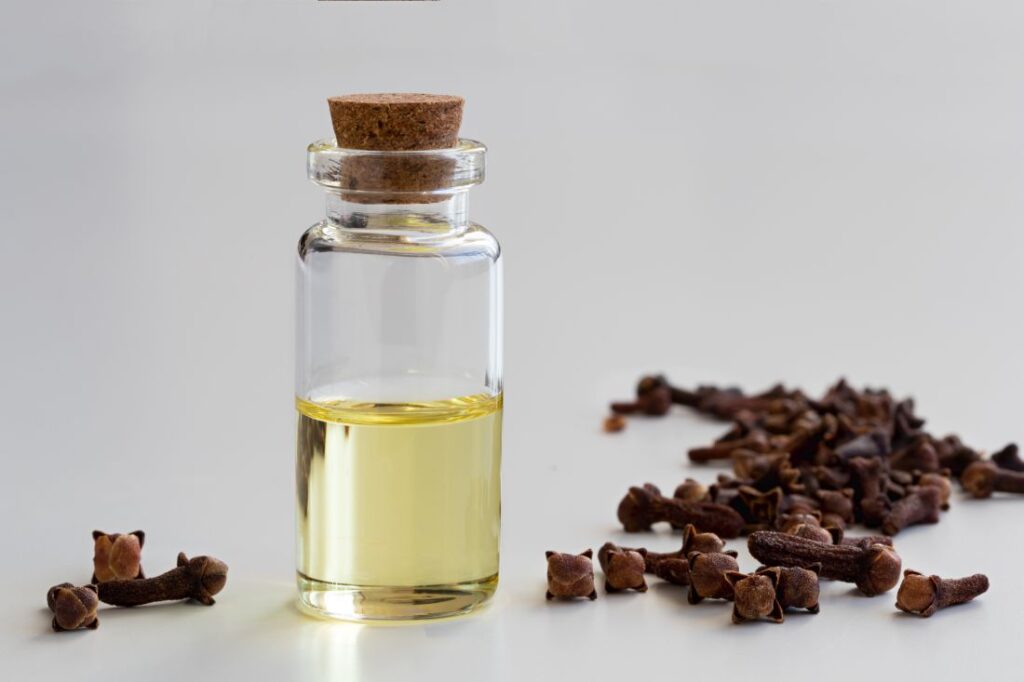
What Is Clove Essential Oil?
Clove essential oil is a volatile oil obtained from Syzygium aromaticum, commonly known as the clove tree. The plant belongs to the Myrtaceae family and is native to the Maluku Islands of Indonesia. Clove is widely cultivated in tropical regions and is best known as an aromatic culinary spice.
Essential oil can be obtained from different parts of the clove tree. The principal types are clove bud oil, clove leaf oil and clove stem oil, obtained respectively from the flower buds, leaves and stems. Among these, clove bud oil is the most commonly used.
Unlike the whole dried clove bud, which contains a broad range of plant constituents, clove essential oil represents the volatile fraction extracted from the plant material. It is therefore a concentrated mixture of volatile compounds rather than simply powdered or liquefied clove.
The chemical composition of the oil is dominated by eugenol, accompanied by compounds such as eugenyl acetate, β-caryophyllene and α-humulene. The proportions of these constituents are not fixed and can vary according to the plant material, geographical origin, environmental conditions, processing and extraction method. [1]
Chemical Composition of Clove Essential Oil
Clove essential oil is a complex mixture of volatile compounds. Its composition is dominated by eugenol, while β-caryophyllene, eugenyl acetate and α-humulene are among the other major constituents.
The relative proportions of these compounds can vary considerably between different samples. In the samples compared in the available literature, eugenol accounted for 55.28% to 97.98% of the oil. β-caryophyllene ranged from 0.11% to 20.97%, eugenyl acetate from 0.90% to 16.55%, and α-humulene reached 7.08% in one of the samples.
![[ref: https://www.chemicalbook.com/ChemicalProductProperty_EN_CB8286611.htm]](https://www.chemicalbook.com/CAS/20180808/GIF/8000-34-8.gif)
Eugenol
Eugenol is chemically identified as 4-allyl-2-methoxyphenol and belongs to the phenylpropanoid class. The review describes it as an aromatic compound with a slightly yellow colour, oily consistency and pungent aroma.
β-Caryophyllene
β-Caryophyllene is a sesquiterpene hydrocarbon and can represent a substantial fraction of clove essential oil. Its concentration varies considerably between samples.
Eugenyl Acetate
Eugenyl acetate is an ester derived from eugenol. Although generally present at lower concentrations than eugenol, it can become a significant constituent in particular oils.
α-Humulene
α-Humulene is another sesquiterpene occurring in clove essential oil. It is usually present in smaller quantities, although its concentration can vary depending on the source and extraction conditions.
The presence and relative abundance of these compounds contribute to the distinctive chemical profile of clove essential oil. Consequently, clove essential oil should not be regarded as a chemically uniform substance; its composition depends on the characteristics of the plant material and the processes used to obtain the oil. [1]
Why Does the Chemical Composition of Clove Essential Oil Vary?
TThe chemical composition of clove essential oil is not uniform across all samples. The relative proportions of its constituents can change depending on several factors associated with the plant and the extraction process.
Important factors include:
Environmental conditions such as climate, temperature, humidity, soil characteristics and nutrient availability can influence the production and accumulation of secondary metabolites in the plant. Genetic differences and variety can also contribute to variation in the composition of the resulting oil.
The extraction method is another important factor. Different techniques can extract volatile constituents with different efficiencies and can therefore produce oils with different chemical profiles.
The magnitude of this variation can be considerable. For example, eugenol concentrations of 55.28%, 82.16%, 97.98% and 82.40% have been reported for samples from different geographical locations and obtained using different extraction approaches. The proportions of β-caryophyllene, eugenyl acetate and α-humulene also differed substantially between these samples.
Therefore, a stated percentage of eugenol or any other constituent cannot automatically be applied to every clove essential oil. When comparing the chemical composition of different oils, their geographical origin, plant material, environmental conditions, processing history and extraction method need to be considered. [1]
Other Major Compounds in Clove Essential Oil
Although eugenol is the predominant constituent of clove essential oil, other compounds also contribute to its chemical profile and biological properties. Among the principal constituents discussed in the review are eugenyl acetate, β-caryophyllene and α-humulene.
Eugenyl acetate
Eugenyl acetate is a derivative of eugenol and is present in varying amounts depending on the origin and extraction method of the oil. In the comparative data presented in the review, its concentration ranged from 0.90% to 16.55% among the samples examined.
Research discussed in the review has investigated eugenyl acetate for antioxidant, anti-inflammatory and antimicrobial activities. Experimental studies have reported antimicrobial activity against several bacterial and fungal species.
β-Caryophyllene
β-Caryophyllene is a sesquiterpene and can constitute a significant proportion of some clove essential oils. In the samples compared in the review, its concentration ranged from 0.11% to 20.97%.
The review describes experimental investigations of β-caryophyllene involving antioxidant, antibacterial, anti-inflammatory and anti-ulcer activities. It has also been investigated as a component of food-packaging materials because of its antioxidant and antibacterial properties.
α-Humulene
α-Humulene is another sesquiterpene found in clove essential oil. It generally occurs in smaller quantities than eugenol and β-caryophyllene, although its concentration can vary between samples. One of the oils compared in the review contained 7.08% α-humulene.
Experimental research reviewed in the paper has investigated α-humulene for anti-inflammatory, anti-ulcer and antioxidant activities, including studies conducted using animal models.
An important point
These compounds should not be viewed as isolated "beneficial ingredients" whose effects simply add together. The review emphasizes that the overall biological activity of an essential oil can vary with its chemical composition, which in turn depends on geographical origin, environmental conditions, processing and extraction. [1]
Extraction of Clove Essential Oil
Clove essential oil can be obtained using several extraction techniques. The choice of method can influence the quantity of oil recovered and its chemical composition, because different techniques can extract volatile constituents with different efficiencies.
Steam Distillation
Steam distillation is a conventional method for obtaining essential oils. Steam is passed through the clove plant material, carrying volatile compounds with it. The vapour is then condensed, and the essential oil is separated from the resulting aqueous phase.
Hydrodistillation
In hydrodistillation, the clove material is immersed directly in water and heated. The volatile compounds are carried with the generated vapour, which is subsequently condensed and separated into oil and water phases.
Both steam distillation and hydrodistillation are established methods, but prolonged exposure to heat can affect some compounds and may require relatively long extraction times.
Solvent Extraction
Solvent extraction uses an appropriate solvent to remove compounds from the plant material. It can produce a high extract yield, but the resulting extract may contain compounds other than the volatile constituents normally associated with an essential oil. The choice and subsequent removal of the solvent are therefore important considerations.
Supercritical-Fluid Extraction
Supercritical-fluid extraction (SFE) uses a fluid maintained above its critical temperature and pressure. Under these conditions, the fluid has properties that allow it to penetrate the plant material and dissolve selected compounds.
Supercritical carbon dioxide (CO₂) is particularly useful because it is non-flammable and can be separated from the extracted material after processing. The technique also provides greater control over extraction conditions and can offer selective recovery of particular compounds.
Emerging Extraction Techniques
Several newer approaches have also been investigated for clove essential oil, including:
Ultrasound-assisted extraction (UAE)
Microwave-assisted extraction (MAE)
Ohmic-heating-assisted hydrodistillation (OAHD)
These techniques are being investigated as alternatives to conventional extraction methods, particularly where improvements in extraction efficiency, processing time or control over the chemical composition are desired.
Why the Extraction Method Matters
The extraction method is not merely a technical step between the clove plant and the finished oil. It can influence the chemical profile of the oil itself. Consequently, two clove essential oils obtained from the same botanical species can differ in their relative concentrations of eugenol and other constituents if different extraction conditions are used.
The composition should therefore be considered in conjunction with the plant material, geographical origin, processing conditions and extraction technique.[1]
![[ref: https://pub.mdpi-res.com/molecules/molecules-26-06387/article_deploy/html/images/molecules-26-06387-ag-550.jpg?1635217736]](https://pub.mdpi-res.com/molecules/molecules-26-06387/article_deploy/html/images/molecules-26-06387-ag-550.jpg?1635217736)
Antioxidant Activity of Clove Essential Oil
Clove essential oil has been widely investigated for its antioxidant activity, with eugenol considered one of the principal compounds contributing to this property. The review describes antioxidant activity in relation to the oil itself as well as to individual constituents such as eugenol, eugenyl acetate, β-caryophyllene and α-humulene.
Experimental studies have evaluated the antioxidant activity of clove essential oil using different in vitro antioxidant assays. These assays measure the ability of the oil or its constituents to interact with or neutralize reactive species under controlled laboratory conditions. The review reports activity in several commonly used antioxidant tests, including assays based on free-radical scavenging and reduction capacity.
The antioxidant activity of clove essential oil is relevant to food preservation because oxidation can contribute to deterioration of food quality. Lipid oxidation, for example, can produce undesirable changes in flavour, aroma and other quality characteristics. Consequently, clove essential oil has been investigated as an antioxidant component in food and in active packaging systems.
The review also describes studies in which clove essential oil was incorporated into films and encapsulated systems. Such formulations are being investigated not only to provide antioxidant activity but also to improve the stability and controlled release of the volatile oil.
It is important, however, to distinguish antioxidant activity observed in laboratory assays from demonstrated health effects in humans. The antioxidant capacity measured in an experimental system does not, by itself, establish that consuming clove essential oil will produce a particular health benefit. [1]
Antimicrobial Activity of Clove Essential Oil
Clove essential oil exhibits antibacterial and antifungal activity against a range of microorganisms. This activity is associated particularly with its high concentration of eugenol and has made clove essential oil a subject of research in food preservation and active food-packaging systems.
Antibacterial Activity
Clove essential oil has demonstrated activity against both Gram-positive and Gram-negative bacteria. Experimental studies have investigated its activity against food-associated microorganisms including:
Staphylococcus aureus
Escherichia coli
Listeria monocytogenes
Salmonella Typhimurium
The effectiveness varies according to the microorganism, concentration of the oil, composition of the oil and experimental conditions.
One study reported minimum inhibitory concentrations of 0.64 mg/mL for E. coli and 0.52 mg/mL for S. aureus. The corresponding minimum bactericidal concentrations were 1.28 mg/mL and 1.04 mg/mL, respectively. These values apply specifically to the oil and experimental conditions used in that study and should not be treated as universal concentrations.
Antifungal Activity
Clove essential oil has also demonstrated antifungal activity against several fungi. Experimental investigations have included species of:
Botrytis
Penicillium
Aspergillus
Fusarium
Both clove essential oil and eugenol have shown inhibitory effects against fungal growth under various experimental conditions.
How Does It Affect Microorganisms?
The antimicrobial activity involves several mechanisms. Because many of its constituents are lipophilic, clove essential oil can interact with the lipid components of microbial cell membranes. This can increase membrane permeability, disrupt membrane integrity and cause leakage of intracellular material.
Eugenol has also been investigated for effects on membrane-associated enzymes, cellular processes, microbial adhesion and biofilm formation. The antimicrobial effect therefore does not necessarily arise from a single mechanism.
Factors Affecting Antimicrobial Activity
The antimicrobial effectiveness of clove essential oil can vary according to:
- chemical composition of the oil;
- concentration;
- target microorganism;
- exposure time;
- temperature;
- method of application; and
- characteristics of the surrounding food or material.
Consequently, antimicrobial activity demonstrated in a laboratory culture cannot automatically be translated into the same level of effectiveness when the oil is incorporated into a food product.[1]
Clove Essential Oil in Food Preservation
Clove essential oil has been investigated as a natural preservation agent because of its antimicrobial and antioxidant properties. Its potential applications include controlling microbial growth, slowing oxidative deterioration and extending the storage stability of different food products.
Meat, Poultry and Seafood
Meat and seafood are particularly susceptible to microbial spoilage and oxidation. Clove essential oil has therefore been investigated in products such as meat, poultry, fish and shrimp.
Its antimicrobial activity can inhibit the growth of food-associated microorganisms, while its antioxidant properties may help reduce oxidative deterioration, particularly lipid oxidation. The effectiveness depends on the concentration of the oil, its chemical composition, the food matrix and storage conditions.
Dairy Products
Clove essential oil has also been investigated in dairy systems because of its antimicrobial and antioxidant properties.
A major practical challenge is its low water solubility. This can make uniform distribution within aqueous food systems difficult. In addition, the strong characteristic aroma and flavour of clove oil can become undesirable at higher concentrations.
These factors make formulation particularly important when clove essential oil is considered for direct incorporation into food.
Bakery Products
Clove essential oil has been investigated for controlling mould growth in baked foods. Fungal contamination is an important cause of spoilage in bakery products, and the antifungal activity of clove essential oil makes it a potential natural preservation component.
Research has examined its inhibitory effects against moulds growing on baked products under controlled conditions.
Fruits and Vegetables
Clove essential oil has also been investigated for preserving fresh fruits and vegetables. Applications include direct treatments as well as incorporation into coatings and other delivery systems.
The objective is to control microbial deterioration while maintaining the quality and freshness of the produce during storage.
The Challenge of Using Essential Oil Directly in Food
The antimicrobial activity of clove essential oil does not necessarily translate directly into effective food preservation.
Food is a complex matrix. Proteins, fats and other food components can interact with essential-oil constituents, affecting their availability and antimicrobial activity. The oil's volatility and limited water solubility can also make uniform application difficult.
Another important consideration is sensory quality. Concentrations capable of producing stronger antimicrobial effects may also impart an intense clove aroma or flavour to the food.
For these reasons, researchers have investigated methods such as encapsulation, emulsification, edible coatings and active packaging to improve the stability, distribution and controlled release of clove essential oil. [1]
Eugenol: The Principal Compound of Clove Essential Oil
Eugenol is the predominant compound in clove essential oil and is one of the principal constituents responsible for its characteristic aroma and biological properties. Chemically, eugenol is 4-allyl-2-methoxyphenol, an aromatic phenolic compound belonging to the phenylpropanoid group.
The concentration of eugenol can vary considerably between different clove essential oils. Values ranging from 55.28% to 97.98% have been reported in samples obtained from different geographical locations and using different extraction approaches.
Eugenol's chemical structure contributes to several properties that have been investigated experimentally. In particular, it has demonstrated antioxidant and antimicrobial activity in laboratory studies.
Antimicrobial activity
Eugenol can interact with microbial cell membranes because of its chemical and lipophilic characteristics. Such interactions can increase membrane permeability and disrupt the integrity and normal functioning of microbial cells.
Eugenol has also been investigated for its effects on microbial adhesion and biofilm formation. These properties are relevant to the potential use of clove essential oil and eugenol in food-preservation and antimicrobial applications.
Antioxidant activity
The phenolic structure of eugenol enables it to participate in reactions involving free radicals and other reactive species. This contributes to the antioxidant activity observed for clove essential oil.
Antioxidant activity demonstrated in laboratory assays should, however, be distinguished from a demonstrated health effect in humans. In vitro antioxidant capacity does not by itself establish that consuming eugenol or clove essential oil provides a particular health benefit.
Eugenol is therefore important not only because it is the dominant constituent of clove essential oil, but also because its chemical properties contribute substantially to the biological activity for which the oil is being investigated. [1]
Encapsulation of Clove Essential Oil
Clove essential oil is volatile, poorly soluble in water and susceptible to degradation during processing and storage. These characteristics can limit its direct incorporation into food and other aqueous systems. Encapsulation is therefore being investigated as a way of protecting the oil and improving its practical usability.
Why Encapsulate Clove Essential Oil?
Encapsulation can surround the essential oil or its active compounds within a protective material. Depending on the system used, this can:
- reduce loss of volatile compounds;
- improve stability during storage;
- improve water dispersibility;
- protect the oil from environmental conditions;
- facilitate incorporation into food systems; and
- provide more controlled release of the active compounds.
The choice of encapsulation material and technique can significantly influence the stability and release characteristics of the resulting formulation.
Encapsulation Techniques
Several approaches have been investigated for clove essential oil, including:
Emulsification
Ionic gelation
Complex coacervation
Inclusion complexes
Liposome formation
Freeze-drying
Spray drying
Nanoencapsulation
Electrospinning
Different techniques produce different types of delivery systems and offer different advantages in terms of particle size, encapsulation efficiency, stability and release behaviour.
Encapsulation and Antimicrobial Activity
Encapsulation can also influence the antimicrobial performance of clove essential oil. By controlling how the oil is dispersed and released, encapsulated systems can maintain contact between the active compounds and the target microorganisms for longer periods.
For example, clove essential oil has been incorporated into chitosan-based nanoparticles and other polymeric systems to investigate improved antifungal and antimicrobial activity.
Encapsulation in Food Applications
Encapsulated clove essential oil is being investigated for incorporation into foods, coatings and packaging materials where direct application of the free oil may be difficult.
This approach is particularly relevant when the oil's strong aroma, volatility and poor water solubility would otherwise limit its practical concentration or distribution.
Encapsulation therefore represents not a change in the biological properties of clove essential oil itself, but a method of controlling how those properties are preserved, delivered and expressed in a particular application. [1]
Clove Essential Oil in Food Packaging
Clove essential oil has been investigated as an active component of food-packaging materials because of its antimicrobial and antioxidant properties. Rather than relying only on the packaging material as a physical barrier, active packaging can incorporate compounds that interact with the food environment and help limit microbial growth or oxidative deterioration.
Clove essential oil has been incorporated into a range of biodegradable polymers, proteins and polysaccharide-based materials, including polylactic acid (PLA), polybutylene adipate-co-terephthalate (PBAT), gelatin, agar and nanocellulose.
Antimicrobial Packaging
Incorporating clove essential oil into packaging films can provide antimicrobial activity against microorganisms associated with food spoilage.
For example, clove essential oil has been incorporated into PLA/PBAT films and tested against Escherichia coli and Staphylococcus aureus. The antimicrobial effect varied with the concentration of oil incorporated into the film, demonstrating the importance of formulation and dosage.
In one experiment, a film containing 10% clove essential oil reduced E. coli from 6.5 to 4.4 log CFU/mL and reduced S. aureus from 6.5 log CFU/mL to 0 log CFU/mL under the specified experimental conditions.
Effects on Packaging Properties
The incorporation of clove essential oil can affect not only antimicrobial performance but also the physical properties of packaging materials.
Studies have investigated changes in properties such as:
water resistance;
opacity;
ultraviolet (UV) blocking;
oxygen permeability;
tensile strength;
elongation; and
Young's modulus.
The direction and magnitude of these changes depend on the polymer, concentration of clove oil and formulation used.
Combining Clove Oil with Other Materials
Clove essential oil has also been combined with materials such as zinc oxide, graphene oxide, mesoporous silica and nanocellulose to develop multifunctional packaging systems.
These combinations can be designed to provide more than one function—for example, antimicrobial activity together with improved mechanical strength, UV protection or barrier properties.
Limitations
The incorporation of essential oil into packaging materials presents several challenges. The oil is volatile and can migrate or evaporate from the packaging material. Its release rate must therefore be controlled to maintain effective concentrations over the required storage period.
The compatibility between the oil and the packaging matrix is also important because incorporation can alter the material's mechanical and barrier properties. [1]
Clove Essential Oil in Edible Coatings
Clove essential oil can be incorporated into edible coatings and films to combine the protective function of the coating with the antimicrobial and antioxidant properties of the oil.
Edible coatings are thin layers applied directly to food surfaces. They can act as barriers against environmental factors while also serving as carriers for bioactive compounds. Incorporating clove essential oil into these coatings provides a means of delivering its volatile constituents directly at the food surface.
Coating Materials
Clove essential oil has been incorporated into several types of edible and biodegradable materials, including:
Chitosan
Starch
Gelatin
Pectin
Protein-based materials
Lipid-based materials
The characteristics of the resulting coating depend on both the properties of the base material and the concentration and formulation of the essential oil.
Antimicrobial Protection
The incorporation of clove essential oil can provide antimicrobial activity at the surface of coated foods. This is particularly relevant for fresh and minimally processed foods where microbial contamination can contribute significantly to deterioration.
The oil can inhibit the growth of susceptible microorganisms while the coating itself provides a physical barrier between the food and its surrounding environment.
Antioxidant Protection
Clove essential oil can also provide antioxidant activity within edible coatings. This is relevant for foods susceptible to oxidative deterioration, particularly products containing oxidizable lipids.
The combination of a physical barrier with antioxidant activity can potentially provide protection through more than one mechanism.
Controlled Delivery
One of the challenges associated with essential oils is their volatility. Incorporating clove essential oil into a coating matrix can help retain the oil at the food surface and regulate its release.
Encapsulation or nanoemulsion systems can further improve the distribution and stability of the oil within coating formulations.
Factors Affecting Performance
The effectiveness of a clove-essential-oil coating depends on several factors, including:
concentration of essential oil;
type of coating material;
particle or droplet size;
method of incorporation;
food surface characteristics;
storage temperature; and
duration of storage.
An increase in essential-oil concentration does not necessarily produce a proportionate improvement in preservation. Excessive concentrations can affect the taste, aroma, appearance or texture of the coated food.[1]
Other Biological Activities of Clove Essential Oil
In addition to antioxidant and antimicrobial activity, clove essential oil and its constituents have been investigated for several other biological effects. These include anti-inflammatory, analgesic, anticancer, insecticidal and other activities.
However, the strength of evidence varies considerably between these areas. Much of the research has been conducted using in vitro experiments or animal models, and such findings should not be interpreted as established therapeutic effects in humans.
Anti-inflammatory Activity
Clove essential oil and its constituents, particularly eugenol, have been investigated for anti-inflammatory effects. Experimental studies have examined their influence on inflammatory processes and mediators.
These findings indicate biological activity under experimental conditions, but they do not establish clove essential oil as a treatment for inflammatory diseases in humans.
Analgesic and Anaesthetic Activity
Eugenol has long been associated with analgesic and local anaesthetic properties, and experimental research has investigated both eugenol and clove essential oil in relation to pain perception and nerve activity.
These properties are also relevant to the historical use of clove preparations in dental applications.
Anticancer Activity
Eugenol and other constituents of clove essential oil have been investigated for cytotoxic and anticancer activity in laboratory and animal studies.
Observed effects include inhibition of cellular proliferation and induction of cell death in certain experimental cancer models. These findings are preliminary and do not establish clove essential oil or eugenol as a cancer treatment.
Insecticidal Activity
Clove essential oil has also demonstrated insecticidal and pesticidal activity in experimental studies. Its volatile constituents can affect insects through mechanisms associated with their nervous and physiological systems.
This property has generated interest in the use of clove-derived compounds as potential botanical pest-control agents.
Interpreting the Evidence
The biological activities investigated for clove essential oil cover a wide range of experimental systems. However, biological activity in a laboratory or animal model does not necessarily translate into a clinically useful effect in humans.
For this reason, the antimicrobial and antioxidant properties of clove essential oil are particularly relevant to the food-science applications discussed in this article, while other biological activities should be regarded primarily as areas of ongoing research. [1]
Limitations and Considerations
Although clove essential oil has considerable potential in food and other applications, its practical use involves several limitations. These arise from the variability of its chemical composition, volatility, stability, solubility and sensory characteristics.
Chemical Variability
The composition of clove essential oil can differ substantially between samples. Geographical origin, environmental conditions, genetics, plant material, processing and extraction method can all influence the relative concentrations of its constituents.
This variability means that results obtained using one clove essential oil cannot necessarily be assumed to apply to another oil with a different chemical profile.
Volatility and Stability
Essential oils contain volatile compounds that can be lost or degraded during processing, storage and application. Exposure to factors such as heat, light and oxygen can affect their stability.
This can reduce the amount of active compound available over time and make consistent dosing more difficult.
Limited Water Solubility
Clove essential oil has low water solubility, which can make uniform incorporation into aqueous food systems difficult.
This is particularly relevant for beverages, high-moisture foods and other formulations where an even distribution of the oil is required.
Sensory Effects
Clove essential oil has a strong characteristic aroma and flavour. Concentrations sufficient to produce antimicrobial or antioxidant effects may also alter the sensory characteristics of a food.
An effective preservation system must therefore balance biological activity with consumer acceptability.
Interaction with Food Matrices
The behaviour of clove essential oil can change when it is incorporated into an actual food rather than tested in a laboratory medium. Food components such as fats, proteins and carbohydrates can influence the availability and activity of the oil's constituents.
Consequently, antimicrobial or antioxidant activity observed under laboratory conditions cannot automatically be assumed to occur to the same extent in a particular food.
Need for Appropriate Formulation
Encapsulation, emulsification, nanoemulsions, edible coatings and active packaging can help address some of these limitations by improving stability, dispersibility and controlled release.
However, the effectiveness of these systems depends on the encapsulating material, formulation, particle or droplet characteristics, storage conditions and intended application.
Research Requirements
Further research is needed to understand how the individual constituents of clove essential oil interact with one another and how these interactions influence its biological activity. Practical food applications also require evaluation of sensory effects, stability, effective concentrations and compatibility with different food matrices.
Clove essential oil therefore has significant potential, but its successful application depends on controlling its composition, formulation and delivery rather than simply increasing the amount of oil used. [1]
Clove essential oil is a highly concentrated extract, and its major constituent, eugenol, can produce biological effects at relatively small concentrations. Its strong antimicrobial activity also means that the concentration used in a food, coating or formulation needs to be carefully controlled.
In particular, increasing the amount of clove essential oil does not necessarily make a product better. Higher concentrations can introduce strong clove flavour and aroma and may affect the sensory quality of food.
Conclusion
Clove essential oil is a chemically complex plant extract dominated by eugenol, with β-caryophyllene, eugenyl acetate, α-humulene and other volatile compounds contributing to its overall composition. The relative abundance of these constituents can vary substantially with geographical origin, environmental conditions, plant material, processing and extraction method.
Its antioxidant, antibacterial and antifungal properties have made clove essential oil an important subject of research, particularly in food science. Applications investigated to date include direct food preservation, edible coatings, active packaging and encapsulated delivery systems.
At the same time, the practical application of clove essential oil presents challenges. Its volatility, limited water solubility, chemical variability and strong sensory characteristics can affect stability, formulation and consumer acceptance. These limitations have encouraged the development of controlled-delivery approaches such as encapsulation and nanoemulsions.
Clove essential oil therefore represents more than a concentrated source of eugenol. Its properties arise from a complex and variable mixture of volatile compounds, and its usefulness in a particular application depends on the composition of the oil, the method of extraction, formulation and the conditions under which it is used.
Further research into the interactions among its constituents, formulation techniques, food-matrix effects and sensory acceptance will be important for translating its experimentally demonstrated properties into reliable practical applications. [1]
References
Works cited in this article.